Our History
Othona comes to Dorset 1965
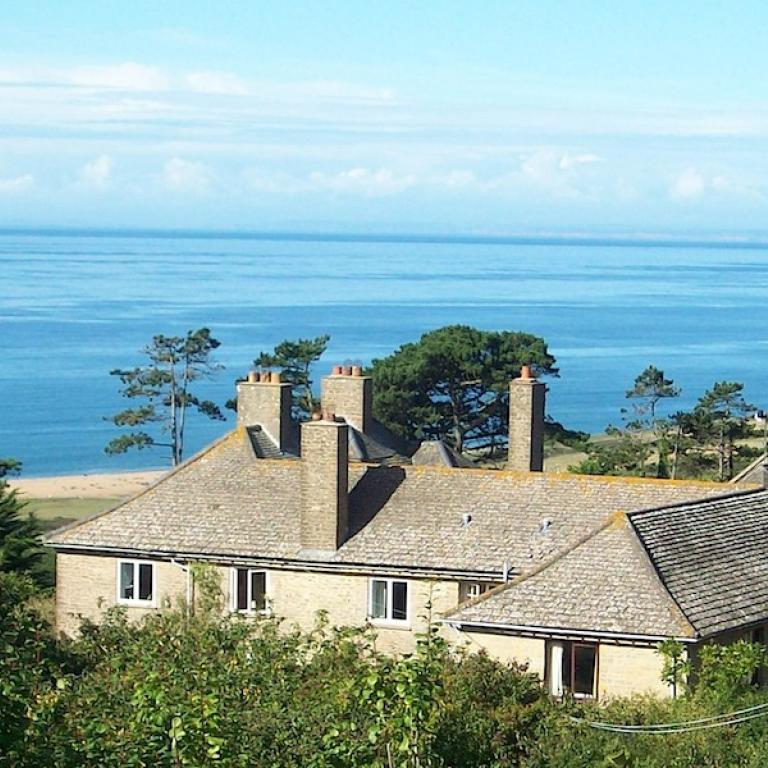
In the 1960s Othona’s original campsite in Essex was overflowing with people every summer. It was time to find a second home. We were offered a big house overlooking the sea in Dorset – as a gift. (Nobody said “Location, location, location” in the 60s.) It was deserted and dilapidated, but full of potential.
In those days the house had no electricity or gas, no mains water, no flush toilets. It had been built that way for a community of women – known as the White Ladies – back in the 1920s. Their chosen lifestyle had combined extreme simplicity, contemplative prayer and growing all they needed for their vegetarian diet. But their community had eventually died out.
Othona people set to work with gusto, cleaning and painting, hacking back the brambles, loving the old house back into active life. Aspects of those pioneering days seem romantic in retrospect, but meant a lot of work: from filling the oil lamps to emptying the soil closets. As the years passed, we found the resources to connect electricity, gas, water and sewage.
The key thing was that Othona now had a centre which could operate and welcome visitors all the year round. We have done so ever since. The way the place is run and the programme we offer has developed, of course. But the sense of a welcoming community, offering a simpler life than the world at large, is the same as ever.
We have enlarged the old house to give more bedrooms. We’ve added a four seasons studio and an excellent library. The chapel was a rather cold and austere building; now thanks to various changes it has a greater warmth in every sense. We have also built separate accommodation for the core team who live on site and work at the centre maintaining our site, facilitating our events and providing our core community, supported by many volunteers and friends.
Othona West Dorset has recently celebrated its 60th anniversary. Together we try to balance two important callings; to be an extended family of strangers becoming friends, and to be a seedbed for the spirituality of the future.
The Othona Community’s Beginnings
Othona began as an experiment in Christian community back in 1946. Our founder, Norman Motley, was a Church of England priest. He served as a young chaplain in the RAF during World War II.
His style was very unusual for that time. He made no distinction between officers and others. And he welcomed completely open discussion of ‘life, the universe and everything’.
He and his friends had found a comradeship in wartime that lowered many social and religious barriers. They wanted to preserve something of that in peacetime. So they began to gather as a community each summer.
They found a place with exciting Christian roots going back almost 13 centuries. This was the Chapel of St Peter’s near Bradwell-on-Sea in Essex. It’s a hauntingly simple little barn of a church on the edge of the Essex marshes, where Othona still has a centre in the next field.
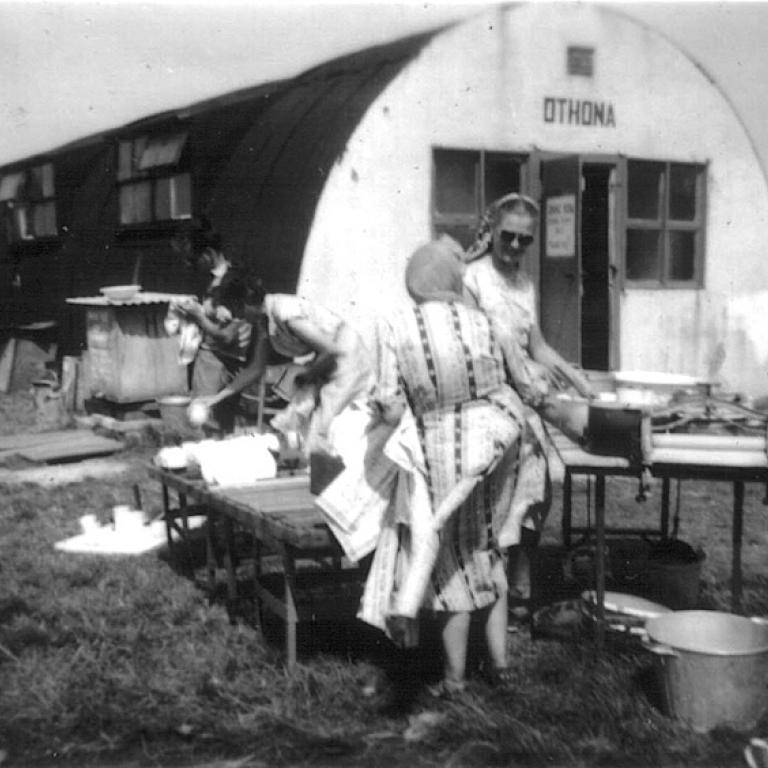
Norman’s fledgling community took the name of an even older settlement on that site – the Roman fort of Othona. With permission to worship in St Peter’s, they spent each summer in tents and old huts.
It was all very basic – the nearest water source was a standpipe two fields away! But basic conditions seemed to help people explore fundamental issues together. Such as how we could try to avoid yet more terrible wars. And what Christians and other ‘people who care’ (as Norman put it) could contribute to a better world.
From these humble first steps the Othona journey began. For thousands of people over the years it has become a precious part of their own journey. The Othona Community is now a network of people stretching over the UK and beyond. It’s a bit like a big extended family in many ways – good and sometimes not so good, as families often are!
The original Othona site in Essex now boasts a permanent centre. And it was from there that pioneers came to open the West Dorset centre near Burton Bradstock in 1965.
Norman Motley, Founder of Othona
Norman was an Anglican priest who originally worked in the parish of Spitalfields in East London. At the start of the Second World War, he became an RAF chaplain in a training centre in Blackpool and there started up what became know as ‘Answer Back’ meetings where young men and women of any denomination could come and ask questions and challenge the received wisdom of the day. These meetings gave people the freedom to explore the issues of pain, suffering and disunity.
After the end of the Second World War, Norman Motley set up the Othona Community in Bradwell-on-Sea in Essex starting from humble beginnings with a collection of tents and ageing army huts. He dreamed of establishing a brand new kind of community centre which offered more than the standard holiday experience. A place where all could come to gather and discuss questions about peace and reconciliation and how best to bring about positive change in the post-war era. Norman set up the centre under the mantra of “work, worship, study and play”. Norman was known to give lectures and encourage deep discussions on a variety of topics as well as making Othona somewhere to relax and enjoy community life together outdoors.
Othona is a living testimony to the endurance and contemporary relevance of England’s often overlooked Christian Socialist tradition of which Norman was a part. In the 1960s Norman sought a new site and was offered the Othona West Dorset site. Over the coming years he sought to establish how this site might complement The Bradwell site and find its own identity and purpose, one significant idea being a place to “care for the carers”, something that the OWD team are currently returning to and exploring further.
If you would like to learn more about Norman Motley, here are a couple of sources:

Adela Curtis and the White Ladies
Sometimes you can almost feel the history of a place. We’re often aware of the White Ladies’ enduring influence around Othona. Their ideals still have something to teach us. And their lifestyle has shaped our house and grounds.
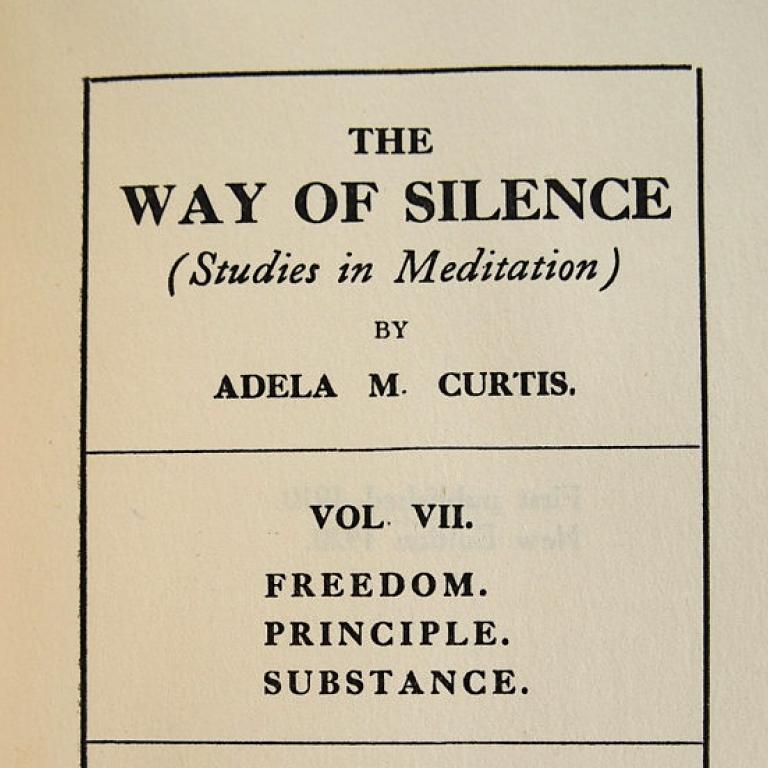
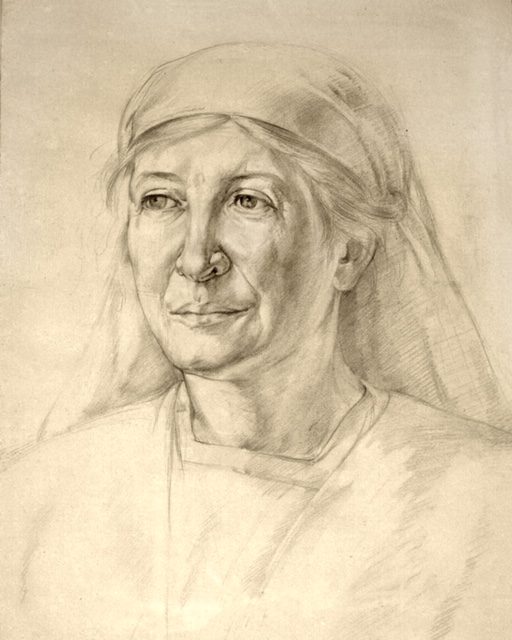
Who were these White Ladies? A small community of women dedicated to a life of self-sufficiency and contemplative prayer. They had been part of a larger community founded by a remarkable woman called Adela Curtis – a writer, a spiritual teacher, a healer and a pioneer. (See pencil sketch of her below.)
At the turn of the century Miss Curtis had run a bookshop in West London and then her first venture into teaching meditation took place at her School of Silence, which was also based in Kensington. Her most ambitious project was the large community which she set up from 1914 in Cold Ash in Berkshire. This settlement flourished for a number of years but then ran into financial difficulties and eventually she had to sell. She thought her active life was over when she ‘retired’ to West Dorset and bought a 17 acre field overlooking Lyme Bay in 1921.
However, some of her followers insisted on following…! So instead of retirement she founded what became the Community of Christian Contemplatives. Most of her followers were women (Sisters) but some men also supported the work and took the title Brother.
The Sisters lived a very simple existence, each woman cultivating the land around a small timber cottage in which she lived. And they wove their own habits of un-dyed wool or cotton – before long the locals called them White Ladies. The house which is now Othona was their guest house and meeting place. Some visitors came from as far away as America (before the days of transatlantic flights). And in 1937 they raised enough money to add the chapel.
Miss Curtis must have been an unstoppable woman. She clearly inspired many people. She was writing books and pamphlets every morning. She gave two or three addresses in the chapel each week and held regular silent healing sessions. She wrote about prayer and theology and also about practical matters, such as the best way of building a compost heap! The writer Aldous Huxley spoke of her as Britain’s one living mystic.
With the Second World War the main house was requisitioned by the army and the chapel became the storeroom for the furniture from the house. A few sisters carried on living in the outlying huts and persevered in praying and gardening until the war was over. But it had dealt their community a body blow. Some of the sisters died during this period also and although there continued to be some community life here into the 1950s, it was much diminished.
After Miss Curtis herself died at the age of 92 in 1960, the trustees of her charity started looking for a suitable organisation to which they could give the house and grounds, with a few of the sisters’ cottages. Eventually their path crossed with that of Norman Motley and the Othona Community.
Liz Howlett, a resident member of the core team at Othona, has been researching Miss Curtis and her community.
- Her most recent blog posts have focussed on a research trip to the States in October 2023 and you can access them by clicking on this link.
- Liz also wrote a couple of blogs for the Dorset History Centre which you can see by clicking on the following links: